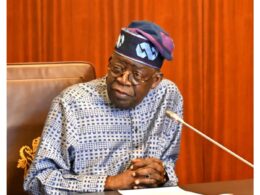
The Lagos-Calabar Coastal Highway project remains surrounded by significant controversy, yet the Tinubu administration’s decision to name the 750-kilometre road after President Bola Ahmed Tinubu has drawn its own unique scrutiny. Works Minister David Umahi justified the move by citing the President’s vision for the project dating back to his time as Lagos Governor. However, with only a small fraction of the construction completed, critics argue that such premature naming deviates from traditional norms.
This pattern of naming public infrastructure after the sitting President is not limited to the coastal highway. The administration replaced the name of the Minna International Airport, previously associated with Abubakar Imam, with that of President Tinubu, despite factual inaccuracies regarding who commissioned the facility. Furthermore, the International Conference Centre in Abuja was renovated and renamed after the President, with other halls within the venue named after various high-ranking officials to signify a broader institutional connection.
Multiple other projects, including a military barracks in Asokoro, the National Assembly’s library, and a proposed polytechnic in Gwarinpa, have also been branded with the President’s name. This practice contrasts with earlier governmental policies, such as the 2003 directive from former Defence Minister Theophilus Danjuma, which sought to restrict the naming of military barracks after individuals to prioritize historical battles or posthumous professional achievements. History shows that such efforts to cement a legacy through static monuments can be fleeting, as institutional names often face future challenges or changes. Ultimately, these actions mirror the warning found in Percy Bysshe Shelley’s poem Ozymandias, where even the most boastful declarations of power are eventually reclaimed by time.