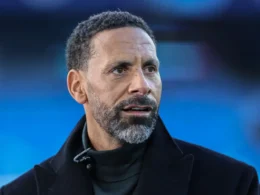
Since taking the helm as Fifa president a decade ago, Gianni Infantino has consistently championed a philosophy that prioritizes scale. His tenure has been defined by an increase in tournament frequency, expanded team participation, and higher commercial yields. The latest shift in his vision suggests a potential move toward a 64-team World Cup.
Infantino argues that broader participation motivates developing footballing nations to improve. While he cites the performance of countries like Cape Verde as a success story for such inclusion, the competitive reality shows a significant gap, with several nations failing to earn a single point. Opponents, including the leaders of Uefa, Concacaf, and the Asian Football Confederation, have voiced concerns that such a massive expansion would degrade the quality of the competition and strain existing football infrastructure.
A 64-team structure might offer a cleaner format by eliminating the need to advance third-placed teams, but the practical hurdles are substantial. Beyond the potential for a diluted tournament, host nations would face immense pressure to provide elite training facilities, massive stadium capacities, and sophisticated transport networks for dozens of additional games. Furthermore, the logistical challenge of managing climate-related heat risks in future host sites makes the prospect of hosting increasingly complex for individual countries.
Ultimately, the push for expansion is heavily linked to Fifa’s financial goals. With projects like the $9 billion revenue target for the current expanded cycle, Infantino justifies the extra matches as a means to fund global football development and provide financial grants to member associations. While the revenue potential is undeniable, critics continue to question whether the incessant growth of the tournament is sustainable for the sport’s long-term integrity.