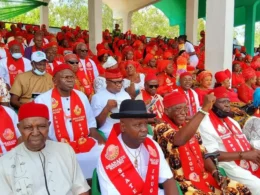





The partnership between Senator Seriake Dickson, the founder of the Nigerian Democratic Congress (NDC), and the pair of Peter Obi and Rabiu Kwankwaso appears to be a pragmatic alliance born of necessity rather than shared ideology. Obi and Kwankwaso required a political platform, while the NDC needed high-profile candidates. This arrangement creates significant concerns regarding governance stability, as it mirrors a dysfunctional relationship that could lead to an ineffective administration if successful in the 2027 elections.
Structural similarities exist between the NDC and the historical Alliance for Democracy (AD) of 1999. Much like the AD, which struggled to secure national victory despite fielding candidates like Chief Olu Falae and Alhaji Umaru Shinkafi, the NDC lacks the extensive, grassroots national machinery required to win a presidency and command the National Assembly. While supporters of Obi argue his personal popularity transcends party lines, historical data suggests that without a robust, nationwide party apparatus, a president would face insurmountable legislative gridlock.
The NDC’s recent requirement for candidates to sign anti-defection affidavits further highlights internal instability. This move suggests an insecurity about party loyalty that is both legally questionable and practically redundant. Furthermore, the party faces potential internal conflicts between the founder, Seriake Dickson, and the ambitions of Peter Obi. Dickson’s public insistence that he is the primary authority behind the party clashes with the independent political style of Obi, creating a rift further widened by the intense, often exclusionary behavior of Obi’s dedicated support base.
Ultimately, this alliance functions as a temporary vehicle rather than a unified political movement. The inherent friction between the party hierarchy and its presidential aspirants indicates that the NDC is unlikely to provide the stable, cohesive leadership required to effectively govern Nigeria.