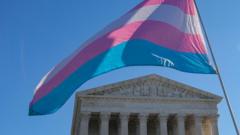
The United States Supreme Court has determined that individual states possess the authority to prohibit transgender women from joining female athletic teams within schools and colleges. This decision addresses legal challenges originating from Idaho and West Virginia, where legislation requires students to participate in sports based on the sex assigned at birth.
Legal arguments against these measures centered on claims that such restrictions infringe upon equal protection rights guaranteed by the Constitution and violate Title IX civil rights statutes. Since Idaho first implemented similar legislation in 2020, over twenty-five states have adopted comparable policies barring biological males who identify as women from competing in female divisions.
While the nine justices reached a consensus that these statutes do not breach Title IX, the court was divided regarding the 14th Amendment’s equal protection clause. The six conservative justices maintained that the Constitution remains unviolated, whereas the three liberal justices dissented. Justice Brett Kavanaugh, writing for the majority, stated that neither the Constitution nor Title IX necessitates a complete restructuring of athletics for women and girls in the United States. Conversely, Justice Sonia Sotomayor argued in her partial dissent that the court’s stance reflects an inadequate interpretation of equal protection.
The Idaho case involved Lindsay Hecox, a long-distance runner who challenged the law upon its enactment. Although lower courts previously granted her an injunction, state legislator Barbara Ehardt advocated for the ban to maintain competitive fairness for biological women. Donald Trump, who prioritized this topic during his 2024 presidential campaign, has previously issued executive orders aimed at excluding transgender women from female teams, an approach mirrored by the NCAA’s own organizational policies.