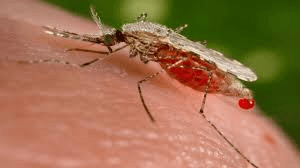
Leaders at the United Nations General Assembly have emphasized the urgent need to increase funding for malaria prevention to curb new cases and deaths.
They warned that without increased funding, the resurgence of malaria within the next five years could lead to an additional 137.2 million cases and up to 337,000 deaths between 2027 and 2029.
Even maintaining current funding levels could result in a “perfect storm” of threats, leading to 112 million more cases and 280,000 deaths.
The World Health Organization reports nearly 250 million malaria cases and over 600,000 deaths annually, primarily impacting young children and impoverished countries.
According to the RBM Partnership to End Malaria, “From the new models, if there is a flatlining of malaria resources (with the Global Fund Replenishment again achieving approximately $15.6 billion in total and allocations across the three diseases remaining on par with the current cycle), the world could see an additional 112 million malaria cases and up to 280,700 additional deaths across the three years, with upsurges and outbreaks happening right across the continent of Africa.”
The new projections were presented by President Umaro Sissocco Embaló of Guinea-Bissau at a UN forum titled “Confronting the Malaria Perfect Storm,” organized by the African Leaders Malaria Alliance.
“In the event of a lower replenishment of $11 billion, and a reduction in the malaria allocation, the modelling forecasts we can expect an estimated 137.2 million additional malaria cases and up to 337,000 additional malaria deaths.
“The world is already facing insufficient funds based on the current cycle. There is an estimated gap of more than $1.5 billion to sustain services at 2023 levels; but with the new challenges we are facing, even this will not be enough to get the fight against malaria back on track.
The CEO of the RBM Partnership to End Malaria, Dr Michael Charles, said, “The evidence is clear that there is a significant risk of malaria epidemics if funding isn’t increased and high-burden areas are unable to deliver critical malaria prevention services.
“Unlike HIV and TB, malaria is concentrated in lower-income countries, particularly across Africa, so often these countries have the least ability to afford the fight. Everyone, no matter where they live, has a right to health. Malaria is straining health systems and making it difficult for people in low-income countries to fully enjoy their right to health.”
“If this doesn’t happen, we can expect cases to spike and increased mortality. We already know this will impact women and young children hardest, as they are disproportionately affected by the disease. It will also push more people into poverty and overwhelm already fragile health systems, with economic consequences that will ripple across the world.
“We simply cannot afford to let this happen. The world has a duty to ensure our most vulnerable populations are not further disadvantaged and to do this we need to ensure the right funding is in place, starting with the global fund replenishment,” he remarked.