



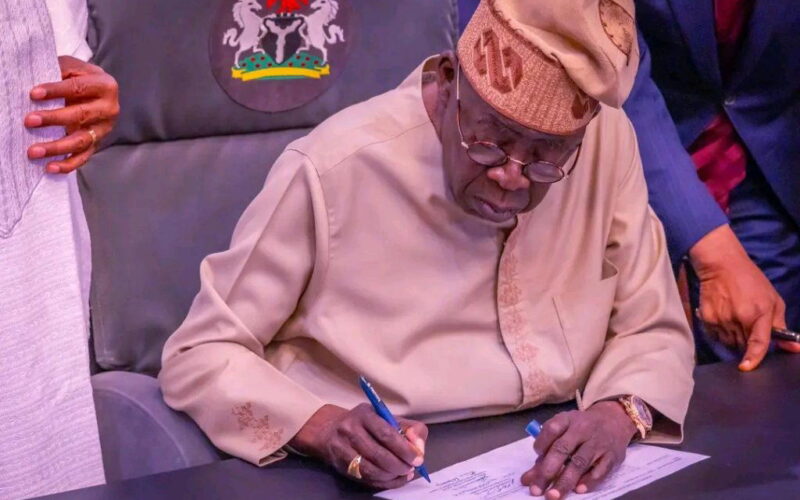
President Bola Tinubu has enacted an executive order to create a unified regulatory system for virtual assets within Nigeria. The Central Bank of Nigeria (CBN), the Nigeria Revenue Service (NRS), and the Securities and Exchange Commission (SEC) will spearhead the supervision of this industry.
Known as the Presidential Executive Order on Virtual Assets Coordination, 2026, the mandate is effective immediately. Bayo Onanuga, the Special Adviser to the President on Information and Strategy, stated that the goal is to improve oversight, foster cooperation between financial authorities, safeguard citizens from scams, and promote legitimate innovation.
Government officials noted that the fast-paced growth of digital assets has complicated the distinction between money and securities, leading to gaps in regulation. Previously, poor coordination among agencies left the country exposed to risks like money laundering and fraud. The new order establishes a Virtual Asset Council, led by the CBN with the NRS and SEC as vice-chairs, to guide policy and close these security holes.
This council will work alongside the NFIU and the Office of the National Security Adviser to form a cohesive legal structure. Furthermore, a Virtual Asset Office will be housed at the CBN to streamline information sharing. Onanuga emphasized that this framework does not grant new powers or replace existing regulators; each agency maintains its original authority.
Under the new rules, the SEC will monitor assets considered securities, while the CBN handles payments and non-security assets. The CBN is also preparing a regulatory sandbox, allowing firms to test new blockchain services under official supervision. Additionally, the NRS will develop a specific tax policy for the sector to boost compliance, while the government finalizes a long-term White Paper for the industry. The Virtual Asset Council has been tasked with creating an implementation plan within the next 30 days.