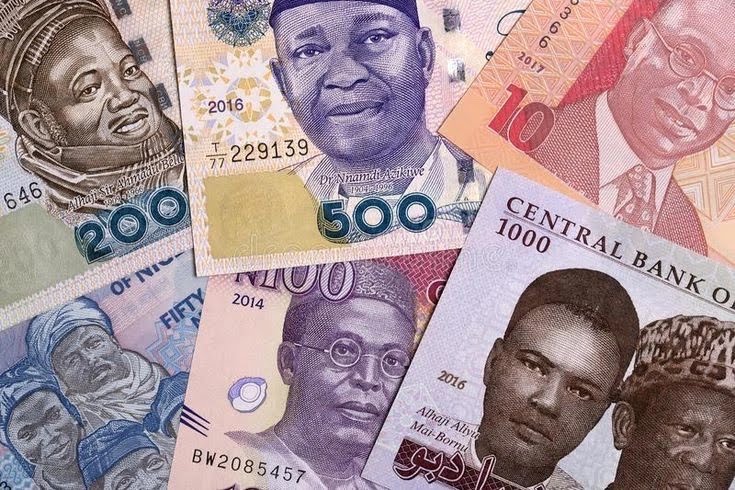
The Nigerian naira has been identified as one of the worst-performing currencies in Sub-Saharan Africa for 2024, according to the World Bank’s latest Africa’s Pulse report.
As of August 2024, the naira had depreciated by around 43% year-to-date, placing it among the weakest currencies alongside the Ethiopian birr and the South Sudanese pound.
This decline is attributed to a surge in demand for U.S. dollars in Nigeria’s parallel market, limited dollar inflows, and slow foreign exchange disbursements from the central bank.
The report notes that financial institutions, non-financial end-users, and money managers driving dollar demand have further exerted pressure on the naira.
Despite Nigeria’s efforts to reform its foreign exchange market, including the liberalization of the official exchange rate in June 2023, these measures have not been enough to stabilize the currency.
Broader economic challenges, such as limited foreign reserves and inflationary pressures, have intensified the naira’s struggles.
The currency’s depreciation has had a significant impact on domestic prices, especially for imported goods, worsening the situation for Nigerian consumers.
Recently, however, there was some recovery, with the naira appreciating by 5.69% against the dollar on October 14, improving from N1,641.27/$1 to N1,552.92/$1.
Despite this positive movement, foreign exchange turnover fell by 44.27% during the same period.
The World Bank forecasts that Nigeria’s economy will grow by 3.3% in 2024, with a slight acceleration to 3.6% between 2025 and 2026 as reforms take effect.
Nonetheless, inflation remains a concern, particularly after the removal of fuel subsidies in mid-2023, which has led to a tripling of gasoline prices and increased transportation and logistics costs throughout the country.