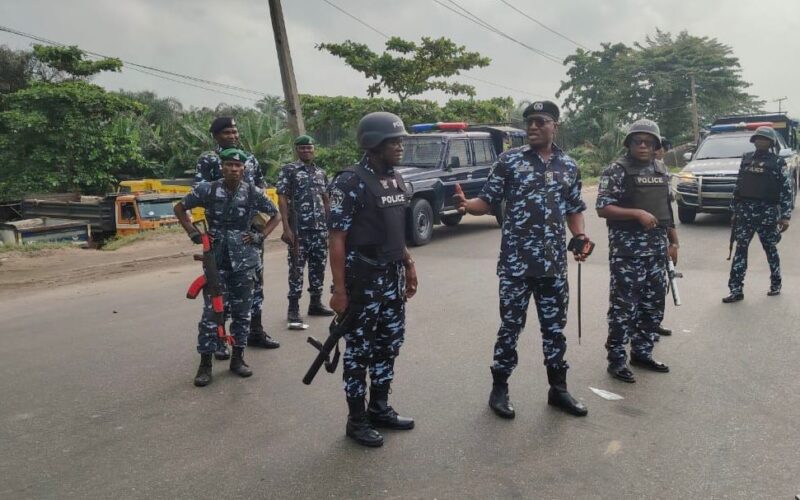
Balarabe Sule, a retired Commissioner of Police, has voiced significant apprehension regarding the feasibility of establishing state-level police forces. While he acknowledged that local law enforcement could strengthen community security, he highlighted that insufficient funding and potential political manipulation pose serious risks.
Sule addressed the Senate’s recent approval of the state police bill by noting that numerous states lack the financial stability to properly hire, outfit, and compensate personnel. He argued that if officers face low or inconsistent pay, they will be increasingly susceptible to corruption, which would ultimately weaken the force.
Furthermore, Sule raised concerns about the authority of state governors over these units. He fears that officials might leverage their control to target political rivals. He also pointed out that varying economic conditions across the 36 states could lead to inconsistent operational standards and a lack of national uniformity.
Despite these warnings, Sule supported the concept of community-based policing. He stated that local recruits are better positioned to gather intelligence and understand the dynamics of their specific neighborhoods. He concluded that for this model to succeed, there must be robust oversight, guaranteed funding, and strict protections against potential executive abuse.