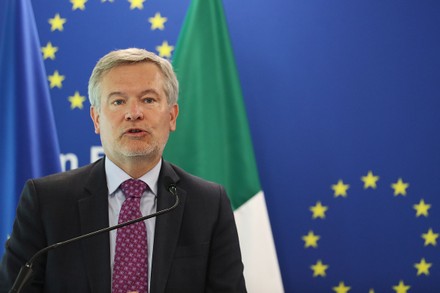
Gautier Mignot, the European Union Ambassador to Nigeria and ECOWAS, has identified women as the primary drivers for establishing a sustainable green economy in Nigeria.
Speaking at a dialogue in Abuja on Tuesday, Mignot emphasized that while women are already foundational to the nation’s climate action, they require strategic investment to scale their impact.
The Current Landscape of Women’s Contribution
The Ambassador highlighted the dominant, yet often informal, role women play in the Nigerian economy:
-
Economic Backbone: Women constitute over 70% of the informal economy.
-
Agricultural Force: They represent between 50% and 70% of smallholder agricultural labor.
-
Key Sectors: Women are leading the charge in agro-processing, clean energy adoption, and circular economy systems.
Systemic Barriers to Growth
Despite their central role, the EU envoy and event convener Amanda Archibong-Doukouré noted that women-led enterprises remain largely “invisible” to formal investment.
Key challenges include:
-
The “Missing Middle”: Many businesses are too large for basic grants but not yet structured enough for major private investment.
-
Exclusion from Leadership: Women remain underrepresented in the decision-making spaces that shape green policy.
-
Structural Constraints: Limited access to finance and formal markets often keeps these businesses small or informal.
Commitment to Inclusive Financing
Mignot called for a shift in how the green economy is funded, moving beyond simple capital mobilization to ensuring diverse investment pipelines.
He reaffirmed the European Union’s commitment to supporting Nigeria through:
-
Expanding renewable energy initiatives.
-
Enhancing climate finance accessibility.
-
Strengthening sustainable value chains and women-led enterprises.
The dialogue concluded with a call for stakeholders to move from acknowledging women’s roles to actively enabling them to lead and benefit from the transition to a low-carbon economy.