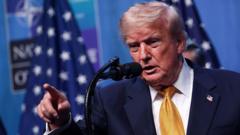
President Donald Trump has announced that the United States is renewing a naval blockade of Iranian ports and will begin levying a 20% surcharge on all commercial goods traversing the Strait of Hormuz. This policy, set to commence at 16:00 Eastern Time on Tuesday, aims to restrict Iranian access to the shipping lane while keeping it open for other nations. Trump designated the U.S. as the self-appointed guardian of the strait, justifying the fee as a necessary measure to ensure security in the volatile region.
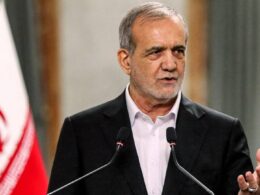
The announcement follows a series of military escalations between Washington and Tehran. The U.S. military reported striking Iranian radar, missile, and drone installations, while Iranian forces responded by targeting American military sites in Kuwait, Bahrain, and Jordan. Iranian Foreign Minister Abbas Araghchi acknowledged the concept of compensation for maritime security services but criticized the 20% rate as excessive, asserting that Iran remains the primary, historical guardian of the region.
International legal experts at the United Nations shipping agency have already signaled opposition, noting that there is no legal basis for mandatory tolls on international straits. Meanwhile, Iranian military officials warned that U.S. interference would be viewed as an act of war. As the conflict risks further destabilizing global energy prices, the practical implementation of Trump’s plan remains uncertain, especially as U.S. allies and domestic critics question the long-term viability and economic impact of these new directives.