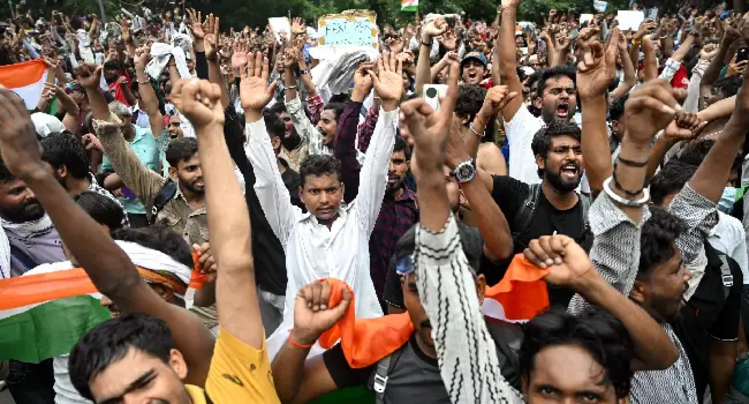
Following mass demonstrations, Indian youth are committed to maintaining pressure on the government after Education Minister Dharmendra Pradhan resigned. Pradhan left his position Saturday in the wake of nationwide backlash over the cancellation of the NEET medical entrance exam, which was compromised by a reported question paper leak.
This scandal impacted approximately two million medical school applicants, leading to public fury and reports of student suicides linked to the crisis. For many, the minister’s departure represents a significant success for grassroots activism under Prime Minister Narendra Modi’s government. Student activist Sakhi noted that the movement provided a rare sense of agency for the youth. The campaign flourished on social media platforms like Instagram, where viral footage of police interventions against protesters and hunger-striking educator Sonam Wangchuk galvanized public support.
Demonstrators like Somaya Korde emphasize that this resignation is merely an opening act. Participants are highlighting broader systemic failures, including chronic exam irregularities, the increased privatization of academic institutions, and a struggling job market. Recent figures indicate that unemployment for Indians aged 15 to 29 climbed to 16.2 percent this June. While some activists fear potential legal repercussions—with authorities having already arrested over 40 individuals and charged more than 100—many remain defiant. They argue that this movement has revitalized a spirit of resistance that could reshape the national political discourse.