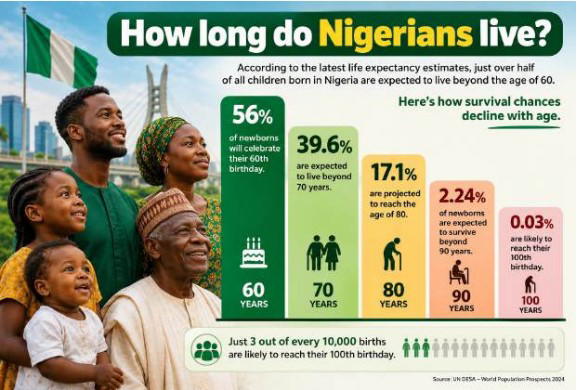
Ganiat Ojo, a 55-year-old trader, lost her life to a massive stroke caused by undetected hypertension. Her story is a common tragedy in Nigeria, where many individuals suffer from preventable, premature deaths. While the global life expectancy average has risen above 73 years, Nigeria remains stuck at approximately 54 years according to United Nations and World Bank data.
Experts indicate that this low life expectancy is not purely a medical issue. Factors such as persistent poverty, weak health infrastructure, inadequate nutrition, and chronic stress significantly contribute to the problem. While child mortality has decreased significantly since 1960, the prevalence of non-communicable diseases—such as heart disease, diabetes, and cancer—is increasing, often going untreated until they become fatal.
Healthcare professionals like Professor Muhammad Ali Pate emphasize that early detection and a stronger primary healthcare system are vital. Furthermore, the emigration of medical personnel has left remaining facilities understaffed and overwhelmed. The social determinants of health, including access to clean water, safe roads, and mental health resources, are fundamental to extending the lifespans of citizens. Mental health, in particular, is frequently ignored, yet untreated depression and anxiety are directly linked to physical decline and early mortality.
Research into Nigeria’s oldest citizens suggests that healthy ageing is often the result of lifelong habits: active lifestyles, consumption of whole foods, strong social ties, and a clear sense of purpose. While genetics play a role, the environment and policy decisions regarding public health, economic opportunity, and sanitation remain the most significant barriers to achieving longer, healthier lives for the Nigerian population.