




For over fifty years, crude oil has served as the primary economic foundation for Nigeria, pushing agriculture from its historical role as the leading source of national revenue. However, as the world moves toward sustainable energy, specialists are pushing for a return to agriculture. They suggest that the sector must evolve from subsistence farming into a competitive, export-driven industry to generate foreign exchange and boost employment.
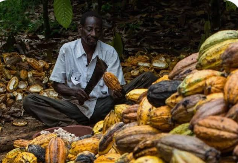
Critics argue that Nigeria fails to capture full market value by exporting raw commodities rather than refined goods. National Bureau of Statistics data reveals a heavy reliance on crude oil; in late 2025, oil exports reached N9.70 trillion, far outweighing agricultural contributions. Even when non-oil exports rise, they remain dominated by primary products like cocoa, sesame, and cashews rather than processed goods like chocolate or industrial derivatives.
Government efforts are underway to modernize this landscape, with the Ministry of Livestock Development creating new traceability systems to meet international standards for meat exports. Meanwhile, industry leaders and officials, such as Lagos State Commissioner Abisola Olusanya, emphasize that agriculture must be viewed as an integrated system involving energy, logistics, and finance rather than a standalone endeavor. They cite the Netherlands as a model for how coordinated national strategy can turn a small landmass into a massive agricultural exporter.
Furthermore, education and technology are viewed as vital components. Experts like Chef Lizzy advocate for integrating agricultural innovation into schools, while tech innovators believe digital platforms can streamline supply chains and link local farmers to global buyers. Stakeholders, including cocoa industry leaders and farmer organizations, agree that while production capacity is sufficient, the lack of infrastructure, consistent policy, and processing capability hinders growth. They conclude that transforming Nigeria’s economy requires a deliberate, private-sector-led ecosystem that prioritizes local value addition over the raw export of natural resources.