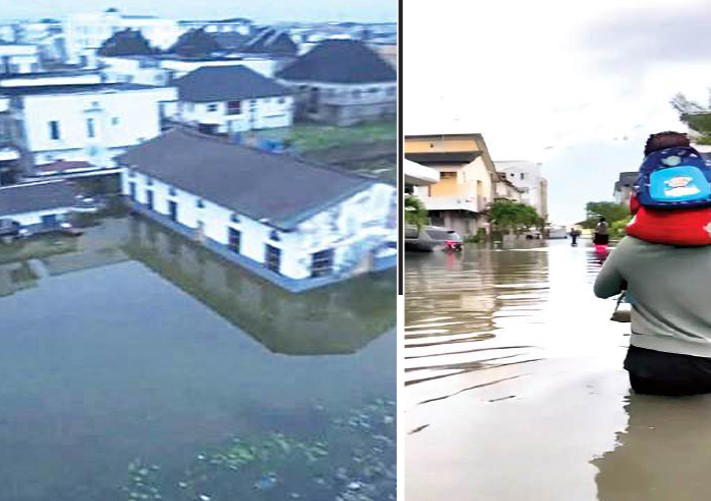
Exclusive residential areas in Lekki have been transformed into stagnant waterways following torrential rains, leading to significant property damage and financial strain. Neighborhoods such as Agungi, Jakande, and VGC, typically associated with luxury, are now frequently submerged. Residents report that floodwaters have destroyed furniture, appliances, and vehicles, with some eyewitnesses describing cars being swept away like debris. Beyond material loss, the flooding has disrupted education and daily commutes, while posing health risks from contaminated water and pest infestation.
Many homeowners identify the construction of the Lagos-Calabar Coastal Highway as a major contributor to the current crisis, claiming it obstructs natural drainage paths toward the ocean. Others point to inadequate urban planning, the reduction of natural wetlands, and the persistent habit of dumping refuse into drains. Local leaders are calling for urgent infrastructure upgrades and wider drainage systems to mitigate the impact of heavy rainfall.
Government officials and project contractors, including Works Minister David Umahi and Hitech Managing Director Danny Abboud, have defended the coastal project. They argue that the highway was designed to facilitate water discharge and suggest that many estates were built on low-lying ground without proper elevation or adherence to environmental regulations. Environmental experts emphasize that while the project faces scrutiny, the flooding is part of a larger, systemic challenge involving climate change and rapid urbanization. They suggest that a multi-stakeholder approach, focusing on integrated drainage management and environmental enforcement, is necessary to protect the region from further catastrophe.