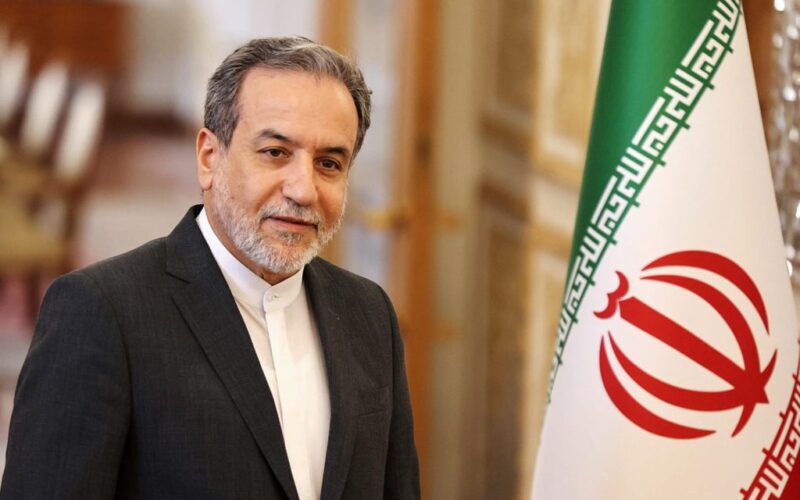
Iran’s Foreign Minister Abbas Araghchi cautioned on Sunday that shipping companies attempting to bypass the specific maritime route mandated by Tehran in the Strait of Hormuz would only escalate regional instability. This warning coincides with renewed military exchanges between United States and Iranian forces near the crucial waterway.
These hostilities threaten a fragile ceasefire mediated by Pakistan, intended to conclude the conflict initiated by the U.S. and Israel in February. Despite the April truce, violence persists, frequently ignited by maritime traffic through the strait. U.S. Central Command reported striking ten Iranian military sites on Sunday, citing ongoing aggression against commercial vessels. In retaliation, Tehran targeted U.S.-linked bases in Kuwait and Bahrain, drawing sharp condemnation from both nations.
Tehran maintains that ships must utilize a corridor near the Iranian coastline, yet numerous vessels have recently preferred a route closer to the Omani coast. Iran’s Revolutionary Guards have vowed to enforce stricter traffic controls, warning that non-compliant vessels will face harsher repercussions. Mohammad Mokhber, an advisor to Iran’s supreme leader, indicated that Iran intends to manage the strait as a strategy to counter U.S. influence in the Middle East.
Although the recent memorandum of understanding established a 60-day period for the safe, toll-free passage of commercial ships, both Washington and Tehran have accused the other of breaching the peace terms. President Donald Trump warned that the U.S. would resume full-scale hostilities if Iranian violations continue, specifically referencing the recent drone attack on the oil tanker Kiku. Meanwhile, Israel persists with operations in Lebanon, despite international efforts to stabilize the region and facilitate a lasting peace agreement.