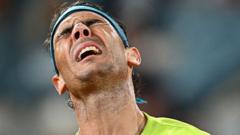
Rafael Nadal, widely regarded as one of the greatest tennis players in history, spent the majority of his legendary career battling persistent agony. Between his initial French Open triumph in 2005 and his retirement in 2024, the Spanish icon secured 22 Grand Slam titles.
Despite being a pivotal figure in the “Big Three” era alongside Roger Federer and Novak Djokovic, Nadal faced a debilitating foot condition that forced him to constantly adapt just to compete.
In a recent Netflix documentary, the 39-year-old reflects on the precarious balance between health and athletic achievement. He admits that he likely would have claimed 10 to 12 fewer major titles had he not pushed his body to its absolute limits.
His struggles began in 2005, when he was diagnosed with Mueller-Weiss syndrome, a rare degenerative foot issue he identifies as the root of his long-term physical hardships.
To maintain his status as a competitor, Nadal relied on specialized insoles and eventually turned to pain-masking treatments, such as anaesthetic injections for his final French Open victory in 2022.
These interventions often led to secondary complications, including knee tendinitis and intestinal issues caused by high doses of anti-inflammatories. He notes that his capacity to endure this suffering was eclipsed only by his love for the sport and the happiness he derived from playing.
His mental fortitude, fostered by his uncle and coach Toni Nadal through a rigorous “tough love” philosophy, eventually manifested as anxiety, requiring professional psychological support.
Later in his career, he adjusted his coaching staff to alleviate the psychological burden of his high-pressure lifestyle, allowing him to finish his career with a greater sense of freedom.