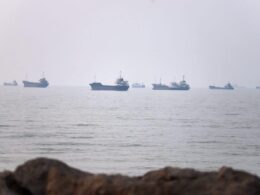




Recent military exchanges between the United States and Iran have cast doubt on the viability of a newly established peace agreement. Tensions flared after Washington accused Iranian forces of attacking a cargo ship in the Strait of Hormuz, prompting a swift retaliatory strike from the US military. According to US Central Command, American forces targeted Iranian drone and missile storage facilities, alongside coastal radar sites, citing an explicit violation of the ongoing ceasefire.
Iranian state media reported an explosion near the Taherouyeh pier in the port of Sirik, though local authorities noted that port operations remained functional with no significant damage. In direct response to the American strikes, the Iranian Revolutionary Guards launched their own counter-attacks against US positions in the Gulf. The Revolutionary Guards cautioned that any future provocations would be met with a significantly expanded military response.
The situation remains volatile, particularly as global oil markets react to the uncertainty surrounding the Strait of Hormuz, a critical transit point for international energy supplies. Simultaneously, a separate peace framework involving Israel, Lebanon, and the United States has faced criticism from Hezbollah. While Israeli Prime Minister Benjamin Netanyahu and Lebanese President Joseph Aoun have expressed cautious optimism regarding the agreement, protests have erupted in Beirut, and Iran maintains that its involvement in the regional conflict is essential to any long-term resolution.
Meanwhile, the International Atomic Energy Agency continues to stress the need for rigorous verification protocols to monitor Iran’s nuclear program. Under the current interim deal, Tehran has pledged to reduce its enriched uranium stockpile, though the process of re-establishing international oversight remains a primary diplomatic hurdle.