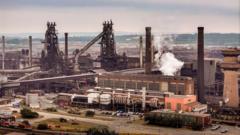
The Chinese government has expressed strong opposition and deep dissatisfaction regarding the United Kingdom’s decision to nationalize British Steel. UK authorities argued that transferring the struggling firm into public ownership was necessary to preserve jobs and maintain an essential national asset.
Although the UK assumed control of the Scunthorpe facilities last year, ownership remained with the Chinese Jingye Group, which restricted government oversight. China’s commerce ministry claimed this takeover violated Jingye’s legal interests and damaged the trust of Chinese investors in the British market. Furthermore, Beijing urged the UK to honor its commitments under the China-UK Bilateral Investment Treaty.
The ministry asserted that the British government ignored Jingye’s economic contributions by seizing the company under the guise of national security. While Beijing plans to monitor the situation and assist Chinese firms in defending their rights, specific actions remain undisclosed. This development complicates relations between London and Beijing, arriving just as Andy Burnham prepares to assume the role of prime minister.
The move follows new legislation allowing public ownership of the steel sector if it satisfies a public interest criteria. Jingye, which reported daily losses of £700,000, is now pursuing compensation. Currently, the government is operating the plant to ensure continuity, though the National Audit Office estimates costs are reaching roughly £1.3 million per day. Business Secretary Peter Kyle confirmed that the state will bear these expenses in the short term.