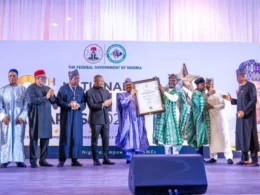
The Federal Government is centering Micro, Small and Medium Enterprises (MSMEs) in its Nigeria Industrial Policy (NIP) 2025. By offering affordable loans, government procurement preferences, and shared industrial infrastructure, the state aims to boost local production and lower reliance on imported goods.
With MSMEs accounting for half of the nation’s GDP and the vast majority of jobs, the policy tackles the primary obstacle of capital access. It introduces single-digit interest loans for agro-processors and manufacturers, while aiming to recapitalize the Bank of Industry to N3 trillion by 2026. Ongoing support schemes like the N75 billion MSME Intervention Fund remain active to help stabilize the sector.
Infrastructure challenges will be mitigated through designated industrial clusters designed to share power and utilities. Additionally, the Small and Medium Enterprises Development Agency of Nigeria (SMEDAN) will receive support to enhance business advisory services. A key pillar is the “Nigeria First” procurement mandate, requiring government agencies to favor locally produced goods, which should provide a steady market for domestic manufacturers.
To modernize the economy, the policy targets the digital integration of 25,000 SMEs by 2026. Furthermore, technical training in automation and mechatronics will be emphasized to build a capable workforce. While the vision is ambitious, experts suggest that the ultimate results hinge on consistent infrastructure upgrades, reliable power, and transparent funding distribution.