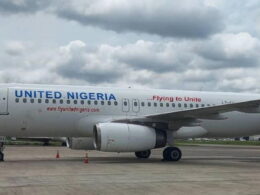




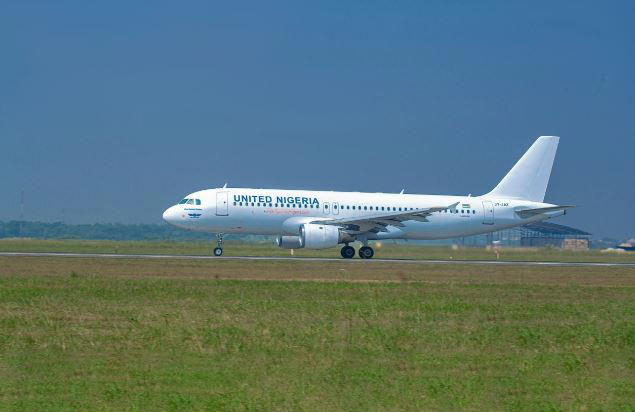
United Nigeria Airlines (UNA) announced on Thursday that domestic carriers have seen no significant reduction in aviation fuel prices, or Jet-A1, despite hopes for relief following the reopening of the Strait of Hormuz. Adedayo Olawuyi, the airline’s Chief Commercial Officer, stated that operators have absorbed much of the cost pressure by utilizing revenue management strategies instead of passing the full burden onto travelers.
This sentiment echoes concerns raised previously by Air Peace Chairman Allen Onyema, who noted that airlines are currently relying on bank loans to secure fuel and are reducing flight frequencies to survive. Olawuyi pointed out that while fuel prices have jumped from N900 in December to roughly N1,700 today, ticket prices have not seen a corresponding spike. He emphasized that the current pricing model is becoming unsustainable, noting that despite past peaks where fuel reached N3,300 per liter, base fares remain relatively controlled by market demand.
Looking ahead, the airline has outlined an ambitious expansion strategy for West and Central Africa. In the near term, UNA intends to launch service to Monrovia, Banjul, Dakar, Abidjan, and Conakry. Furthermore, the carrier is exploring a partnership in Guinea-Bissau to establish a local airline presence. The company also maintains long-term interests in Central African hubs like Douala and Libreville, alongside plans to connect to Johannesburg, South Africa, to foster regional trade.