For the seventh night in a row, the United States military conducted strikes against Iranian targets after President Donald Trump declared the temporary ceasefire invalid. US Central Command (Centcom) utilized fighter jets, drones, and warships to target logistics hubs, surveillance installations, underground ammunition storage, and maritime assets.
Reports of explosions surfaced in Yazd, Qeshm island, and the Bandar Abbas port area. While Iranian media alleged that two oil tankers detonated in the Strait of Hormuz, Centcom rejected these claims as fabricated. Tensions have effectively halted commercial shipping in the strait, a critical artery for global energy supplies.
Meanwhile, regional dynamics remain volatile. Jordan reported the interception of 10 Iranian missiles, and reports indicated that American personnel were wounded in recent attacks on Jordanian bases. Iran claimed to have struck US facilities in Kuwait, Bahrain, Syria, and Jordan, though Washington denied these reports. Furthermore, despite Iranian allegations that US forces targeted civilian infrastructure like bridges and train stations, the White House maintained that all operations were strictly focused on military logistics.
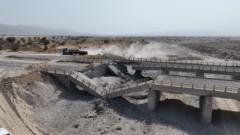
Video evidence and imagery have confirmed damage to the Gariveh Bridge in Hormozgan province. Provincial authorities stated that seven individuals died during the strikes, a figure Washington has not validated as they insist all actions targeted military-specific infrastructure.