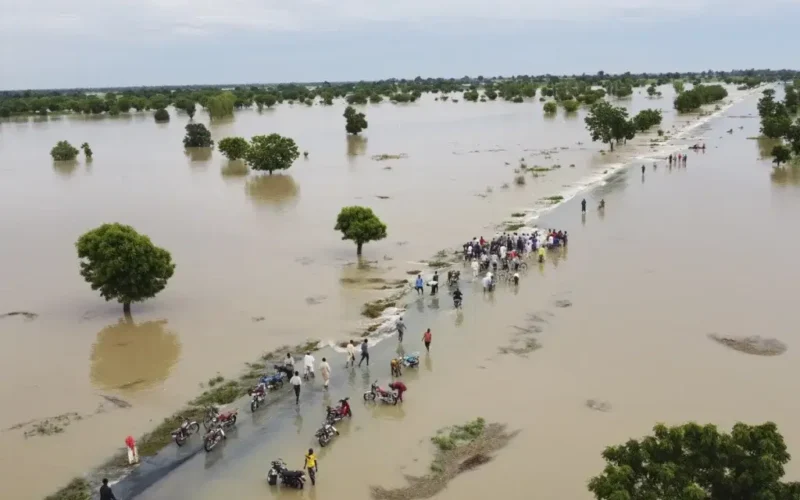
A recent period of relentless rainfall has caused significant flooding across various states in Nigeria, resulting in extensive property damage and disrupting the daily lives of residents. Regions including Ondo, Ekiti, Oyo, Bayelsa, Delta, Rivers, Cross River, Edo, and Ebonyi have all reported varying levels of devastation. Throughout these areas, overflowing drains and obstructed waterways have turned roads into rivers and left homes and businesses submerged in water.
In Ondo and Ekiti, flash floods have effectively halted transport and commerce, while residents in Oyo and Cross River struggle with the aftermath of stagnant water caused by poor refuse management and clogged infrastructure. The Niger Delta region, specifically Bayelsa and Delta, remains on high alert as river levels rise. Meanwhile, in Ebonyi, severe storms and flooding have severely impacted agricultural yields and destroyed stock at the Abakaliki International Market, leading to substantial financial losses for farmers and traders.
Environmental experts point to a combination of climate change and inadequate urban planning as the primary drivers of these disasters. They emphasize that while state emergency management agencies have begun clearing canals and launching awareness campaigns, these efforts often feel reactive rather than proactive. Authorities have warned that with the peak rainy season between August and October still ahead, communities living near riverbanks and on flood plains remain at high risk. Government officials are now threatening to demolish illegal structures built over drainage paths to prevent further catastrophes.