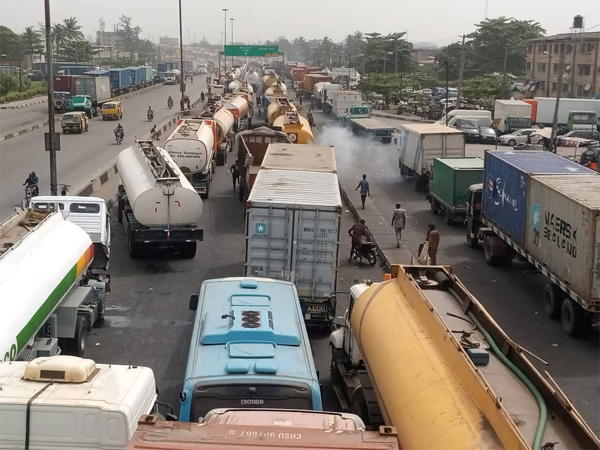
A complex network of oil cartels, petroleum marketers, and transport unions, coupled with lax enforcement, is being held responsible for the ongoing traffic paralysis in the Apapa and Kirikiri districts of Lagos. This congestion continues to severely restrict business operations, escalate logistics costs, and disrupt the daily lives of residents in the region.
Investigations indicate that while the downstream sector is vital for fuel distribution, the situation is worsened by insufficient holding facilities and poor planning. Many tankers abandon designated parking areas to queue on public roads, effectively turning major transit routes into unauthorized parking lots. While firms like TotalEnergies and NIPCO maintain relatively orderly operations near the Naval Base, the Mile 2-Kirikiri route remains heavily obstructed.
Industry groups like the National Association of Road Transport Owners (NARTO) argue that tank farms are a primary catalyst for the chaos. They claim operators frequently accept more trucks than their infrastructure can support, forcing drivers to wait on public streets for days. Furthermore, allegations persist that illicit financial gains from illegal roadside parking discourage stakeholders from utilizing official holding bays.
Police authorities, including the Ports Authority Police, have denied direct culpability for the gridlock. They maintain that the responsibility for providing adequate infrastructure and traffic management lies with terminal operators and the Nigerian Ports Authority. Meanwhile, the Major Energies Marketers Association of Nigeria (MEMAN) asserts that its members utilize automated systems to prevent queuing on public roads and advocates for a more integrated, collaborative approach to enforcement and logistics management across the industry.