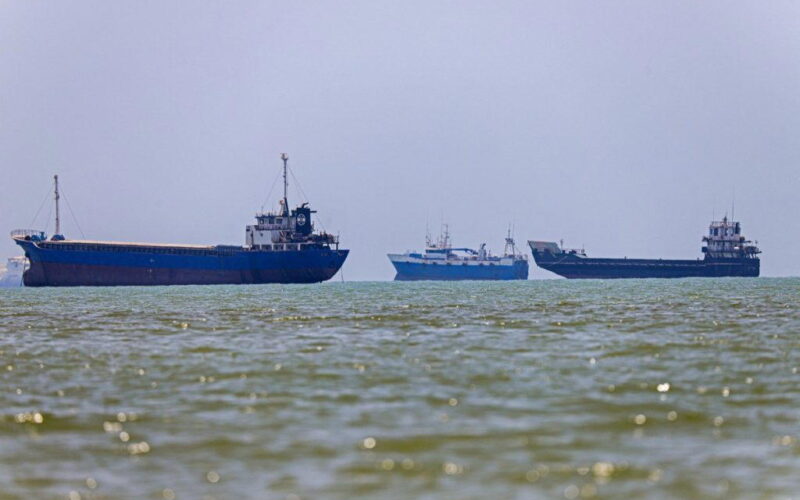
Iran officially declared the Strait of Hormuz closed on Sunday, while the United States government maintains that the crucial waterway remains open for international traffic. This development follows a new round of military exchanges, sparked after Iranian forces targeted a commercial vessel, forcing its crew to abandon the burning ship.
The Iranian Revolutionary Guards stated the strait would remain shut until American influence in the area ceases. Conversely, US Central Command issued a statement via X asserting that the waterway is open to all vessels, emphasizing that US forces are positioned to guarantee freedom of navigation. An adviser to Iran’s supreme leader described control of the passage as holding greater strategic value than possessing nuclear weapons.
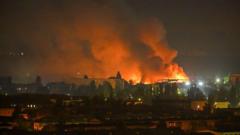
The escalation intensified significantly as the US military conducted strikes on approximately 140 targets across Iran. Explosions were reported in several locations, including Bandar Abbas and Jask, where one soldier was confirmed dead. President Donald Trump remarked that the US response was robust, noting that the strikes occurred despite ongoing diplomatic efforts to secure a deal.
Iranian retaliation extended beyond its own borders, with missile activity reported in Qatar, the United Arab Emirates, Bahrain, Jordan, and Oman. In a rare diplomatic move, Oman summoned the Iranian ambassador to protest strikes on the port of Duqm, which allegedly damaged logistics and refueling facilities. Meanwhile, the maritime situation remains dire; a Cyprus-flagged ship was abandoned, leaving one Indian sailor missing, while Omani authorities assisted in the rescue of 23 other crew members. Mediators from Pakistan have urged both sides to prioritize de-escalation and return to diplomatic channels to resolve the deepening crisis.